

What up, horror homies?
This week, I’ll be reviewing The Wind, an excellent, female-created film from 2018. Directed by Emma Tammi, written by Teresa Sutherland, and starring Kit Goldsmith, Julia Goldani Telles, and Ashley Zuckerman, this terrifying tale of isolation and betrayal in the early American West puts women at the center of the narrative in a way few Western horror films have before.
As you all know, I’m a huge fan of isolation horror in all its forms, and something this film does particularly well is the utilization of both the psychological and geographical elements of isolation horror to strong effect.
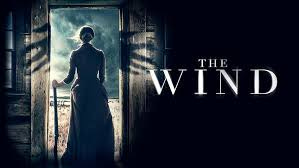
As always, I’ll start with the bits of the story that didn’t necessarily work for me, with the friendly reminder that art is entirely subjective-just cause it didn’t work for me doesn’t mean it won’t work for you, and despite any of my perceived shortcomings with this film, I highly recommend you check it out for yourself. It’s definitely not a film I’d steer you away from, as I really enjoyed it overall.
Things That Weren’t For Me:
I felt the timeline/structure in this movie was pretty overly convoluted. You had 3-4 separate timelines all stacking on top of each other throughout the film, despite the fact that we have a solo Point of View character. Unless I’m mistaken, I believe this was done to increase the psychological tension and to crank up the ambiguity of the narrative, making us as viewers wonder: “Is she crazy, or is there really a monster?” Unfortunately for me, it just diminished the tension by breaking up the pacing.
I've complained about this before, and I’ll do it again…but the infidelity angle is always such an easy cop-out,t and so many stories immediately default to it. This movie is no acception and it’s unfortunate because in some ways, I felt it made the film more about the Isaac character (our lead-lady, Lizzie’s husband) than it needed to. Again, I can understand where it comes from— what, after all, could drive you into even deeper isolation if you’re already geographically in the middle of nowhere? How about being betrayed and cheated on by the only other person for miles around…the person you’ve chosen to build a self-sufficient life with? Yeah…that’d do it. It’s effective. It’s relatable, but it co-opted the rest of the story for me, and that was unfortunate, as there was a really cool story surrounding Lizzie otherwise. It was also super-predictable. And that’s always a bit disappointing to me when those obvious story reads become true.
The monster feels slightly half-baked. We see many forms of its manifestation and possession of both the living and the dead, but it’s left intentionally vague to preserve the “potential madness” of our main character. I don’t, however, feel at any point that the demon wasn’t real and would have, therefore, liked to see a bit more of a confrontation with it. The way the movie ends sends a final message that I find it hard to cope with, but I’ll let you watch for yourself. Let me know in the comments how you took the ending, I’d love to have that discussion :).
Ok, now that this dirty work is finished, let’s get to the good part! IE: the parts of this movie that kicked ass, and they were certainly prominent.
What Was Right Up My Alley:
First and foremost, ya’ll know I have to have good character work. In a book that comes down to the written words, but in a film, I’m extra picky because it needs to permeate the performances on a deep level as well. This film certainly does not have any problems in that regard, as every actor on this set knocked it out of the park. In this indie horror film, we’re getting all-star performances from four lesser-known actors in a story with pretty minimal set design and no crazy action scenes to lean upon. I love the feminine quality of this film from top to bottom, and you can feel that relatability to the story from the lead actresses and the director. It truly does a great job of capitalizing on the terror inherent in being a woman alone — but that doesn’t make her weak. Lizzie is anything but.
I also love me some realism, and in a film like this, that starts with the setting and the way our characters interact with it. Two great examples of using the setting effectively in this are Lizzie’s mastery of the shotgun: it’s never overstated, it’s not made into a huge deal or over-emphasized—the gun is hers, she knows how to use it because she would in this setting, and it also isn’t enough to save her.
The dialogue feels very believable. It’s minimal, realistic, and organic. Though they didn’t devote themselves too heavily to “period accurate” dialect, that didn’t matter because the characters all fit together as a cohesive cast, and WHAT they said to each other felt like real people talking. That’s what matters most to me in this regard.
A final note on the isolation horror in this film. Boy…it’s really effective. Taking everything I’ve said above into context and coupling that with the fact that Lizzie basically does everything a person SHOULD for her position in a horror film (she’s always armed, she sits in a corner and watches the door when the monster is outside, she tries to leave…), it’s all for naught because her isolation is absolute. It is social. It is political. It is physical and geographical. As a woman, she is shackled to her married life, despite his infidelity and her unhappiness, and no matter how hard she tries to warn her husband of the threat to their family, he won’t listen to her because the monster is smart enough to never show itself to her. And so, instead of her salvation, we watch her slow descent into suicidal ideation and utter loneliness—a burden that can crush the strongest man or woman, regardless of how prepared they seem.
All in all, I strongly recommend this movie for anyone who loves a slow-burn, isolation horror with an ambiguous ending and strong feminine themes. Even if you like a period drama and are thinking of dipping your toes into horror, this would be a perfect transitional piece for you :). Go check this out on Shudder, ASAP!
Thanks for reading, and we’ll see you next week with another horror review. Next week, I’ll be reviewing Attachment, the 2022 sapphic horror film by director Gabriel Bier Gislason. I’m really enjoying my recent deep dive into more female-directed horror, so this will be the next stop on that journey! Hope you’ll all join me :).